Junk Fees and Drip Pricing: Why the Price You See Is Never the Price You Pay
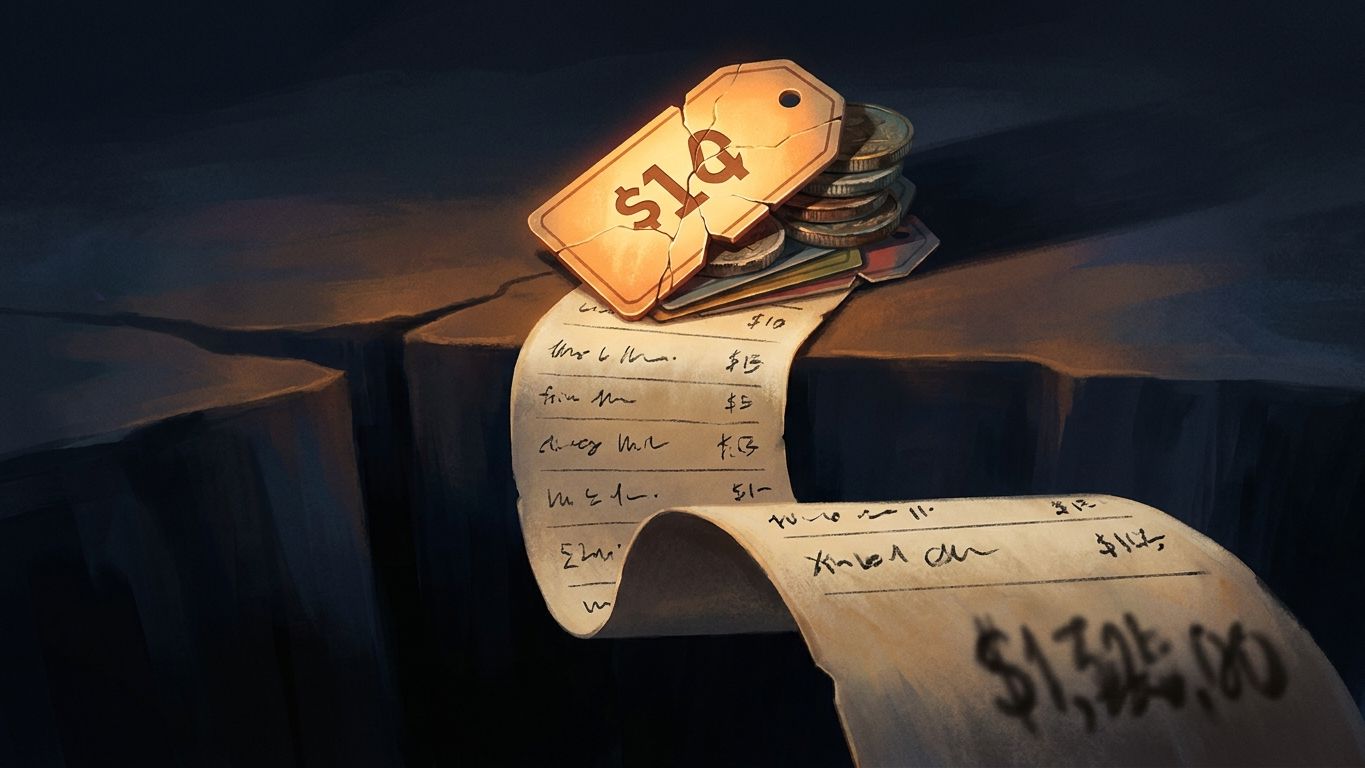
You find a concert ticket for $65. By the time you reach the final screen, it's $94: a service fee, a facility charge, an order processing fee, and a delivery fee for a ticket that arrived as a QR code. The hotel that listed at $129 a night wants another $45 a night as a "resort fee." The delivery that was "free" has a small-order fee, a service fee, and a suggested tip. None of these numbers were lies, exactly. They were just kept out of sight until you had already invested time, picked your seats, and decided to buy.
What Drip Pricing Actually Is
Economists call it drip pricing: a low headline price is advertised first, and mandatory charges are revealed one at a time as you move through checkout. "Junk fees" is the broader term for charges that are hard to avoid, poorly explained, or out of proportion to anything you actually received. The Federal Trade Commission has estimated that drip pricing alone wastes more than $11 billion of consumers' time per decade, before counting the money itself.
The reason it persists is simple. A business that shows the honest total price looks more expensive than a competitor that shows the base price and adds the rest later. Anyone who plays fair loses the comparison, so the whole market drifts toward the less honest display.
The Psychology That Makes It Work
Drip pricing isn't just a trick on your wallet. It exploits how people make decisions in sequence.
- Anchoring. The first number you see becomes the reference point. A later $29 in fees feels like an add-on to $65, not a 45% price increase, and every figure after the anchor gets judged against it.
- Sunk cost and commitment. By the time fees appear, you've spent ten minutes choosing seats or dates. Walking away means wasting that effort, so many people pay rather than start over.
- Scarcity pressure. Ticket and booking sites often show a countdown timer or a "3 people are looking at this" notice at exactly the moment the total changes. It's hard to recalculate calmly with a clock running.
- Comparison failure. When fees differ by seller, the base prices stop being comparable. You can't shop on price when the price isn't shown.
If this sounds familiar, it's a close cousin of the tactics we covered in our piece on dark patterns, and of the quiet price increase described in our article on shrinkflation.
Where the Junk Fees Hide
- Live events. Service, facility, and processing fees stacked on the face value, often revealed only at the last step.
- Hotels and short-term rentals. Resort fees, destination fees, and cleaning fees that can add a large share to the nightly rate.
- Food delivery and restaurants. Service fees, small-order fees, and surcharges added to the bill and sometimes described as covering healthcare or wages.
- Car rentals and travel. Concession recovery charges, facility fees, and optional-sounding add-ons that are hard to decline.
- Banking, internet, and phone bills. "Administrative" or "regulatory recovery" line items that make the monthly bill larger than the advertised plan price.
What the Rules Actually Cover
In May 2025, the FTC's Rule on Unfair or Deceptive Fees took effect. It requires businesses that sell live-event tickets and short-term lodging, which includes hotels and vacation rentals, to show the total price, including mandatory fees, up front and prominently, rather than adding them at the end. Violations can bring civil penalties of more than $53,000 each, adjusted annually for inflation.
It's worth being precise about the limits. The final federal rule is narrower than the broader proposal that preceded it: it applies to those two industries, not to every retailer, restaurant, or delivery app. Optional extras and government taxes can still be shown separately, and shipping charges are handled differently. For other sectors, protection depends on general unfair-and-deceptive-practices law and on the states.
Enforcement has started. In 2026, StubHub agreed to pay $10 million in a settlement with the FTC over listings that displayed ticket prices without mandatory fees for a few days in May 2025. The company disputed the agency's characterization but agreed to the refunds. Separately, the FTC's 2025 lawsuit against Live Nation and Ticketmaster, which includes allegations about fees disclosed only at checkout, was still working through the courts at the time of writing, so treat the allegations in that case as allegations, not findings.
States have moved too. California's SB 478 requires most businesses to advertise the full price including mandatory fees, and Minnesota and Massachusetts have passed their own broad rules. Because this area is changing quickly, check what applies where you live.
How to Protect Yourself
- Compare at the last screen, not the first. Add up the final total before the payment button on every option you're weighing. The real comparison happens there.
- Look for all-in pricing toggles. Many ticket and travel sites now offer a setting to display prices with fees included. Turn it on.
- Ask about fees before booking a hotel. Search the property's name plus "resort fee," and check whether the total shown matches what the confirmation says.
- Slow down when a timer appears. A countdown is a reason to pause, not hurry. If the deal only works under pressure, it isn't much of a deal.
- Screenshot the advertised price and the final total. If the two don't match for a covered purchase, you have evidence for a dispute or a complaint.
- Report it. Complaints to the FTC and your state attorney general are how patterns turn into enforcement actions like the one against StubHub.
The Bottom Line
A price is supposed to be the one number you can rely on. Drip pricing turns it into a first offer that keeps changing after you've committed. The law is catching up, but only for some industries and some places, so the most dependable protection is a habit: never judge a price until you can see the last screen, and treat any number that arrives late as part of the price all along.