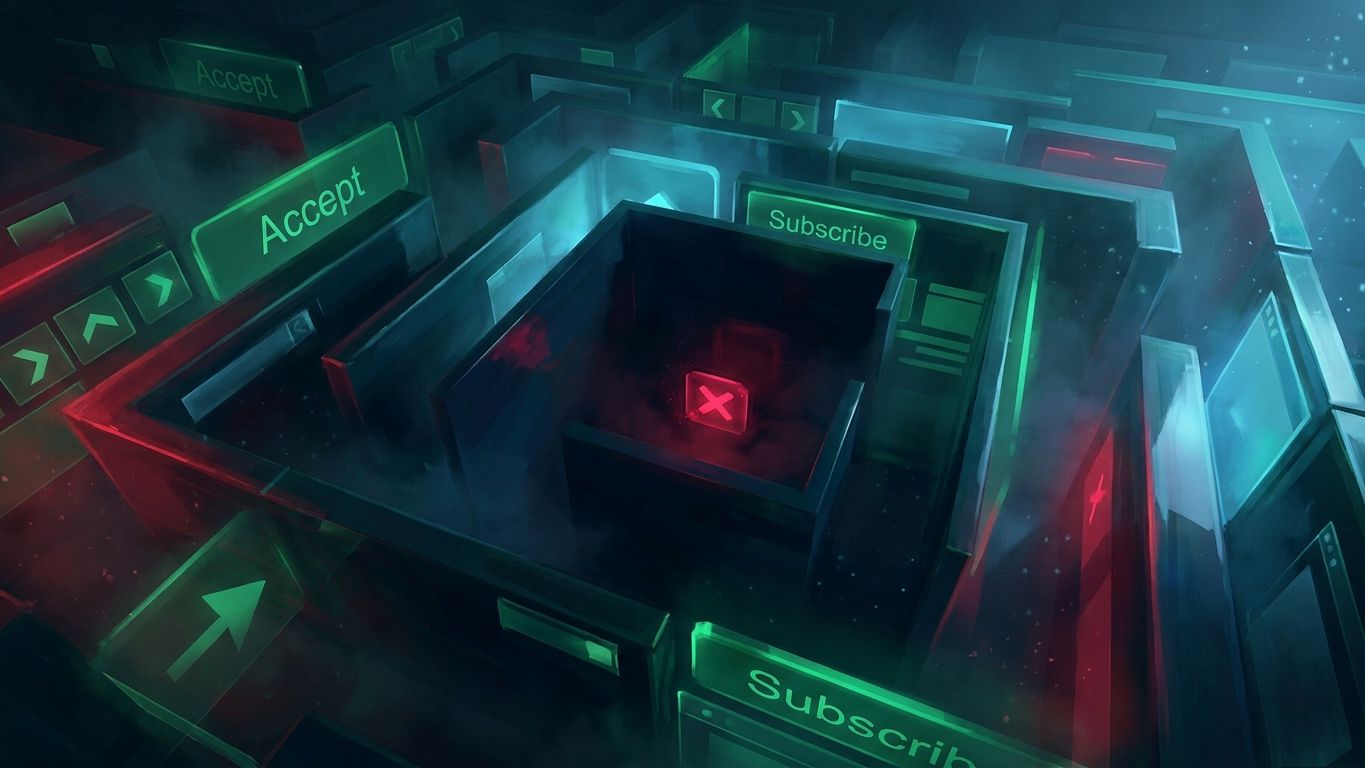
Dark Patterns: The Manipulative Design Tricks Websites Use to Control Your Choices
Dark patterns are the deceptive interface tricks that quietly steer you toward decisions you wouldn't make with full information — a countdown timer that resets the moment you refresh the page, a subscription that takes four clicks to start and forty to cancel, a checkout total that grows by twelve dollars in the final step. They aren't bugs. They are deliberately designed, A/B-tested, and shipped because they measurably increase revenue. And once you know what to look for, you'll start seeing them everywhere — in the apps you use every day, the retailers you trust, and the cookie banner you clicked through five minutes ago without reading a word.
What Are Dark Patterns, Exactly?
The term was coined in 2010 by UX researcher Harry Brignull, who defined dark patterns as interfaces "carefully crafted to trick users into doing things they didn't mean to." That distinction matters. Persuasive design — a well-placed call-to-action, a clean checkout flow, a genuinely limited-time discount — tries to make the right choice easy. A dark pattern makes the wrong choice easy and the right choice deliberately hard, exploiting how people actually read, scan, and decide under time pressure rather than how a rational actor theoretically would.
Six Dark Patterns You've Probably Fallen For This Week
- Fake urgency and scarcity. "Only 2 rooms left at this price," or a countdown clock that quietly resets on refresh. The scarcity is manufactured, not real — its only job is to short-circuit comparison shopping.
- Confirmshaming. The opt-out button that guilt-trips you on the way past: "No thanks, I don't want to save money." It works by making the default choice feel socially or personally embarrassing to decline.
- Forced continuity. A free trial that requires a card up front and silently converts into a paid subscription, with the renewal notice buried in an email you're unlikely to open.
- The roach motel. Easy to check in, brutal to check out. Sign-up is one click; cancellation requires finding a hidden menu, calling a phone number during business hours, or surviving a retention-agent script.
- Hidden costs and drip pricing. The price you see isn't the price you pay — service fees, "processing" charges, and taxes appear only at the final step, after you've already invested time in the purchase.
- Privacy zuckering. The cookie banner where "Accept All" is a single bright button and "Reject" or "Customize" is a gray link buried behind two more screens.
Why This Works on Smart People Too
None of this depends on the target being careless or unintelligent. It depends on being human. Dark patterns are engineered against the fast, automatic thinking that behavioral economists call System 1 — the mode most people are in most of the time, especially while scrolling on a phone. Default bias means people overwhelmingly stick with whatever option is pre-selected. Loss aversion means the fear of missing a "deal" outweighs the calm math of whether the deal is actually good. Decision fatigue means the fifteenth micro-choice in a checkout flow gets far less scrutiny than the first. A well-built dark pattern doesn't need to fool your judgment — it just needs to reach you before your judgment switches on.
The Business Logic Behind the Deception
Dark patterns rarely start as a deliberate plan to deceive; they start as a metric. A growth team A/B-tests a subscription flow, one variant adds friction to cancellation, that variant reduces churn by a few percentage points, and the numbers get promoted before anyone asks whether the reduction came from genuine satisfaction or from customers who simply gave up trying to leave. In a subscription economy where recurring revenue is the primary valuation metric, friction on the way out isn't a side effect — for some products, it is the business model.
Regulators Are Finally Catching Up
Consumer protection law is starting to close the gap between what's profitable and what's legal. In the United States, the FTC pursued one of its largest-ever consumer protection actions against Amazon over Prime's notoriously convoluted cancellation flow, alleging that millions of people were enrolled without clear consent and then obstructed from leaving — a case that ended in one of the largest settlements in the agency's history. The FTC has since finalized its "click-to-cancel" rule, which requires cancellation to be at least as easy as sign-up, and separately banned the sale and purchase of fake reviews and testimonials outright. In the European Union, the Digital Services Act explicitly prohibits dark patterns in online interfaces, and the Digital Markets Act adds further constraints on how large platforms structure consent flows. California's privacy law requires "symmetry in choice" — if accepting takes one click, declining can't legally take five.
How to Protect Yourself From Dark Patterns
- Set a calendar reminder before any free trial ends — don't rely on the company to remind you.
- Use a virtual or single-use card number for trials so a forgotten subscription can't quietly renew.
- Before subscribing to anything, search "[company] cancel" — a painful cancellation process is usually well documented by people who've already lived it.
- Install a browser extension that auto-rejects non-essential cookies instead of manually navigating every consent banner.
- Slow down at checkout on purpose. Drip pricing depends on you being emotionally committed by the final screen; a five-second pause to re-total the price breaks the spell.
- Report what you find. Complaints build the enforcement cases that got the FTC's click-to-cancel rule written in the first place.
Every dark pattern has an author — a designer, a growth team, a product roadmap that decided friction was an acceptable price for a better retention number. Recognizing the pattern is the first step to refusing to pay it.