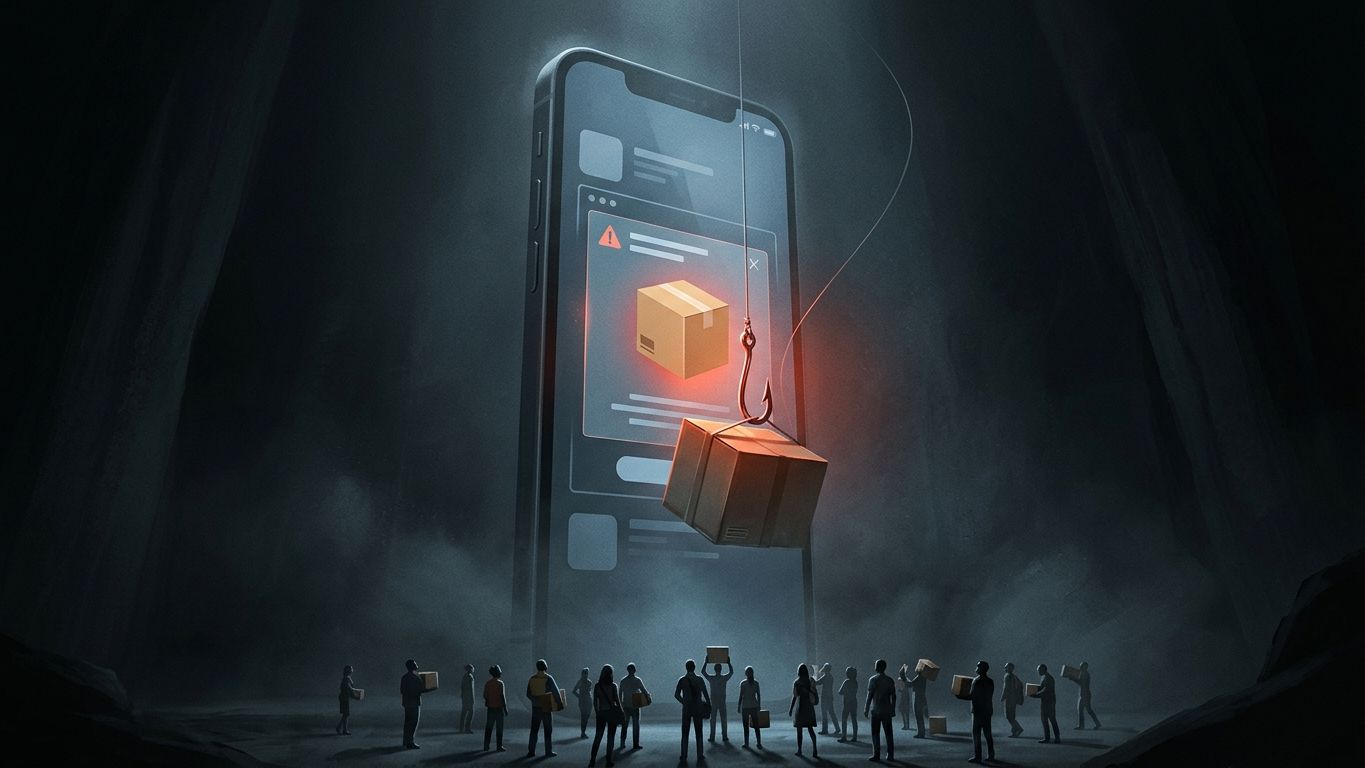
Fake Package Delivery Texts: How the Holiday Smishing Scam Works and How to Spot It
Your phone buzzes: "Your package could not be delivered. Confirm your address and pay a $1.99 redelivery fee." You have three orders in the mail, so it feels plausible. That is exactly the point. Fake delivery texts are built to land during the weeks when everyone is waiting on a box, and the window is open right now.
Why Fake Delivery Texts Spike Before the Holidays
State consumer alerts, citing the FTC, describe fake package-delivery messages as the most reported type of text scam, and news coverage this fall reports they climb from early October through January as holiday sales begin. The logic is simple. A scammer sending texts at random might reach someone with no pending order. In November and December, almost everyone has one.
This kind of attack is called smishing: phishing by SMS. The message carries a link, the link leads to a look-alike page, and the page collects whatever the scammer wants.
How the Scam Works, Step by Step
- The bait. A text or email claims to be from USPS, FedEx, UPS, DHL, or Amazon. It says a delivery failed, an address is incomplete, or a package is on hold.
- The link. It points to a look-alike domain, for example something like "usps-tracking-support-update.com" instead of usps.com. The page copies the carrier's logo and layout.
- The small fee. You are asked to pay a tiny redelivery or customs fee. The amount is low on purpose, so you stop thinking and start typing your card number.
- The real theft. The fee is not the goal. Your card details, billing address, and often a one-time code are. Those can be used for much larger charges, or sold.
Bottom line: the scam works because it matches something you are already expecting. The text is generic, but the timing is not.
Seven Red Flags in a Delivery Text
- You did not order anything from that carrier. Carriers deliver for retailers. You rarely have a direct relationship with them.
- No tracking number, or one you do not recognize.
- A fee to release or redeliver a package. The FTC says USPS will not contact you out of the blue about a delivery or demand payment to redeliver.
- A strange domain or shortened link. Extra words, hyphens, or an odd ending (.top, .xyz, .info) are common.
- Urgency. "Act within 24 hours or the package will be returned."
- An email address or regular-looking phone number as the sender instead of a short code the carrier actually uses.
- Requests for personal or card information just to confirm an address.
The Newer Twist: AI and Fake Storefronts
Delivery texts are only one holiday tactic. An industry release published today warns that AI tools, including deepfake ads and cloned voices, are making shopping fraud cheaper and more convincing, and that fraudsters often steer victims off the shopping platform and into texts, gift cards, or crypto, where buyer protections do not apply. That is a vendor's claim, so treat the scale with caution, but the pattern is consistent with what consumer agencies warn about: fake storefronts advertised on social media at deep discounts, and sellers who ask you to pay in a way you cannot reverse.
It also connects to deal hype. If an unbelievable discount pushed you to a site you have never used, check whether the price was ever real. We cover that in how retailers make a sale price look like a bargain.
How to Protect Yourself
- Do not tap the link. Go to the retailer's website or app where you bought the item and check tracking there, or type the carrier's address yourself.
- Never pay a delivery fee from a text.
- Pay with a credit card. Card disputes are generally easier than recovering money sent by debit transfer, gift card, or crypto.
- Turn on your phone's spam filters and block unknown senders.
- Keep a list of what you ordered. Knowing what is really on the way makes a fake notice stand out.
What to Do If You Already Clicked or Paid
- Clicked only: close the page, do not enter anything, and run a security scan if your device offers one.
- Entered card details: call the number on the back of your card, report the fraud, and ask for a replacement card.
- Entered a password: change it everywhere you reuse it and turn on two-factor authentication.
- Report it. Forward the text to 7726 (SPAM) and file a report at ReportFraud.ftc.gov, then delete the message.
Frequently Asked Questions
Is a text about a missed delivery always a scam?
No. Real carriers send tracking updates, but only if you signed up for them or gave a retailer your number. The safe habit is to verify through the retailer or carrier directly, not through the link.
Can I get hacked just by receiving the text?
Receiving it is generally low risk. The harm comes from tapping the link, entering information, or installing something the page asks for.
Why does the scammer have my number?
Often from data breaches, purchased lists, or simply guessing numbers in bulk. Having your number does not mean they know you have an order. It is just a safe bet in November.
What is a brushing scam?
Sellers ship cheap items to real addresses using someone else's details, so they can post fake "verified purchase" reviews. You receive a package you did not order. It is a sign your address is circulating, so watch your accounts.
Bottom line: a delivery text is a request for your attention, money, or data, and you are allowed to ignore it. Check the order yourself, through a channel you chose.