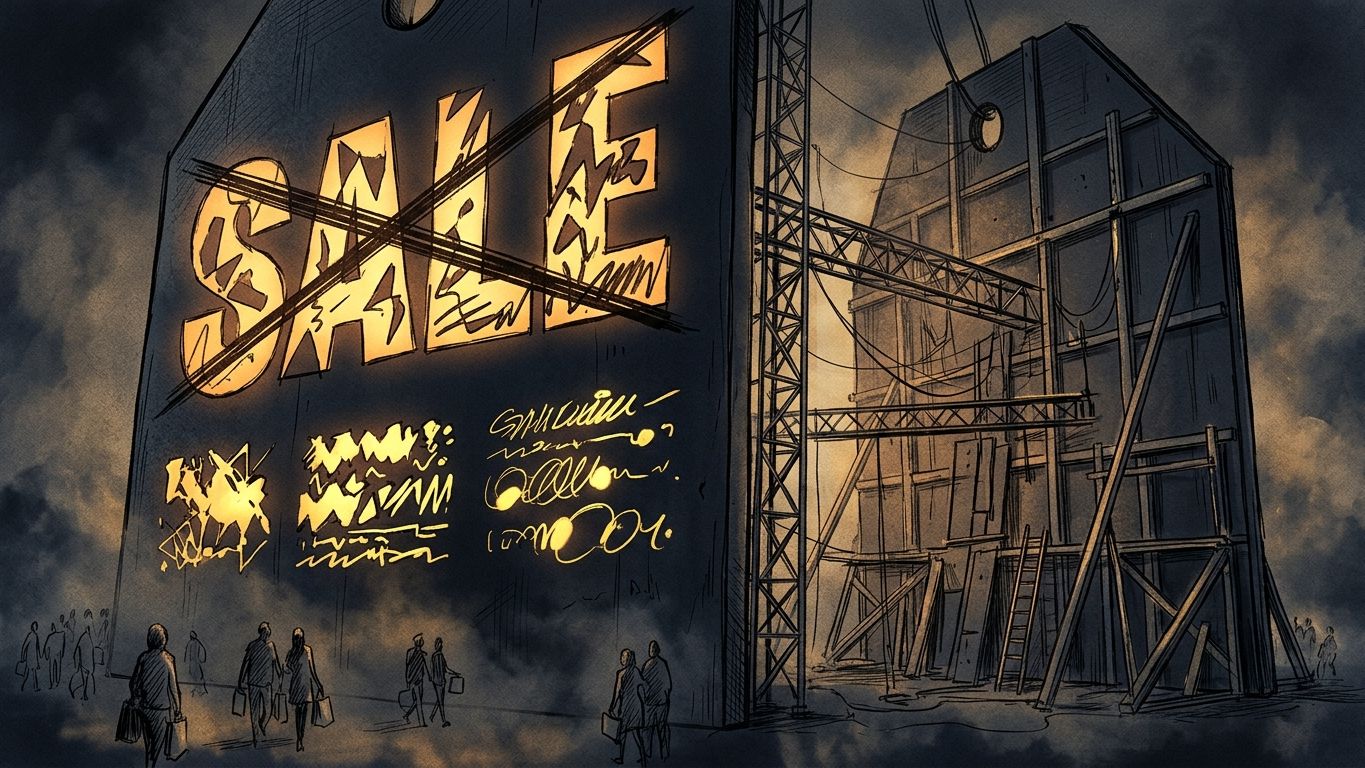
Fake Black Friday Discounts: How Retailers Make a Sale Price Look Like a Bargain
The tag says $199, crossed out above a bold $119. Forty percent off, ends Friday. It feels like finding money on the sidewalk. But a discount is only a comparison between two numbers, and you are only shown one of them being honest. The $119 is a real price you will really pay. The $199 is a claim about what the product usually costs, and in the weeks before Black Friday, that claim is worth a second look.
What the Research Found
The consumer group Which? tracked prices in the UK for a full year around the 2024 Black Friday sales, covering home, tech, and health appliances from eight large retailers. It reported that 83% of the products it followed had been the same price or cheaper on at least one other occasion, and 42% were cheaper outside the sale period altogether. It also found evidence of retailers using recommended retail prices to make a deal look more generous. This was one investigation in one country, and prices vary by retailer and product. But it matches a pattern consumer researchers have flagged for years: the biggest discount on the tag is not always the lowest price of the year.
How a Discount Gets Manufactured
- The inflated reference price. The "was" price is a price almost no one paid, or one that appeared for a short stretch long before the sale. The bigger the gap, the bigger the percentage off.
- The pre-sale price bump. A price creeps up in the weeks before the event, then "drops" back to where it started. The discount is real on paper, and the savings are not.
- The recommended retail price. Comparing a sale price to a manufacturer's suggested price that most stores never charge makes any ordinary price look like a markdown.
- Sale-only models. Some products are made or stocked specifically for the sale with slightly different specifications, so there is no earlier price to compare against, and the "original" price has never really existed.
- The permanent sale. If an item has been "on sale" for months, the sale price is simply the price.
Why It Works on Us
The trick relies on anchoring: the first number you see becomes your reference for value, and everything afterward is judged against it. A crossed-out $199 makes $119 feel like a win before you have asked whether the product is worth $119. Add a countdown timer and a "only 3 left" notice and you are deciding fast, which is when anchors are hardest to question. We covered the same pressure in our piece on the psychology of scarcity, and the way fees get added after the headline price in our article on junk fees and drip pricing. A cheap-looking price is a feeling, not a fact.
What the Rules Say
In the United States, the FTC's Guides Against Deceptive Pricing, which date back decades, say that a "former" or "regular" price should be one at which the product was openly and actively offered for a reasonably substantial period in the recent regular course of business. A reference price that was never really charged is a fictitious one, and an item that is always "on sale" is a recurring enforcement concern. The guides are guidance rather than a single bright-line rule, and states have their own laws, so how this plays out depends on where you live and shop.
The European Union is stricter in one specific way. Since May 2022, retailers announcing a price reduction have had to state the prior price, defined as the lowest price they applied in the 30 days before the reduction. That makes the pre-sale bump harder to hide in the EU, though it does not stop a retailer from running a higher price longer ago.
How to Check a Deal Before You Buy
- Look at the price history. Price-tracking tools and browser extensions record how an item's price has moved. If it has hit this price before, or sits near it most of the year, it is not a Black Friday deal.
- Start tracking now. Put the items you want on a watchlist or note their prices today. A price you recorded in early November is more trustworthy than a "was" price printed on the tag.
- Compare the final price across stores. Ignore the percentage and compare the actual amount you would pay, including shipping and any fees, at two or three retailers.
- Check the model number. If the exact model appears only at one retailer, or only during the sale, you cannot tell whether it is a deal. Compare specifications with the standard model.
- Ask whether you needed it at all. The cheapest purchase is the one you never made. A real 30% off something you did not plan to buy is a 100% increase in your spending.
- Beware of lookalike offers. Black Friday is also peak season for fake shopping sites, fake delivery notices, and fraudulent coupons. Type the retailer's address yourself instead of clicking an ad or message, and be suspicious of any price far below every other seller. Our guide to spotting fake reviews can help you judge a product page you do not know.
The Bottom Line
Some Black Friday deals are genuinely good, and a few are the lowest prices of the year. The difficulty is that the percentage on the tag cannot tell you which ones. The price you pay is the only number you can verify, so build your own comparison before the sale starts, and let the countdown timer run out if it has to.
Sources
- Which?: Most Black Friday deals the same price or cheaper at other times of the year
- US Code of Federal Regulations: 16 CFR Part 233, Guides Against Deceptive Pricing