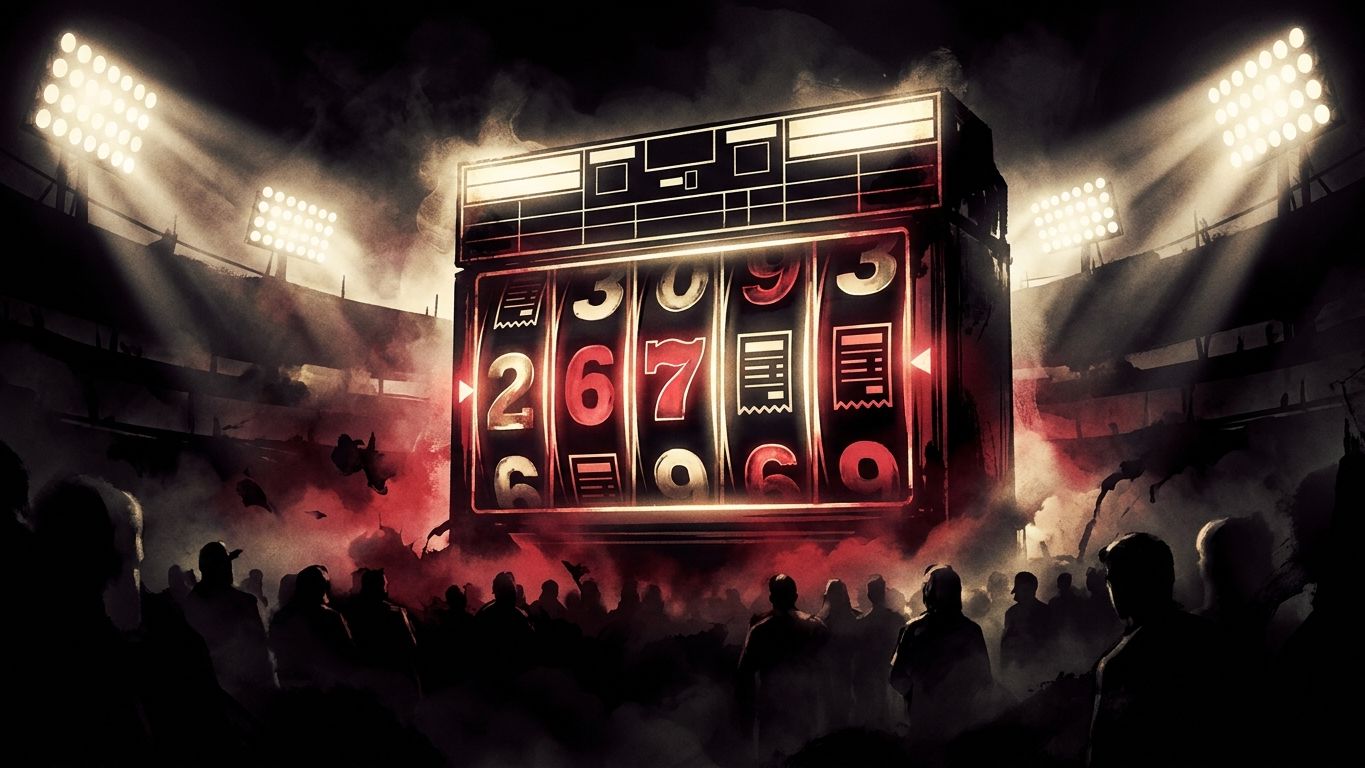
How Sportsbooks Turned Every Broadcast Into a Casino Floor
The commentator isn't just calling the game anymore. He's telling you the live odds on the next play, the app on your phone is buzzing with a same-game parlay it thinks you'll like, and the halftime break is sponsored by a sportsbook offering you bonus bets if you act before the second half kicks off. None of this existed in American broadcasts a decade ago. Almost all of it exists now, on nearly every game, because the fastest-growing customer for televised sports turned out to be the industry selling bets on them.
From Illegal to Everywhere in a Few Years
For decades, sports betting was effectively confined to a handful of states and a large offshore and illegal market. Once the federal ban was struck down, state after state legalized it in quick succession, and mobile sportsbooks spent enormous, competitive sums on advertising to grab market share while the market was still being defined. Betting odds moved from a niche newspaper column to a standard broadcast graphic, official league partnerships turned sportsbooks into networks' own business partners, and a generation of viewers who'd never placed a wager in a casino started opening an app to bet before the opening kickoff was even played.
Odds as Content
The clearest sign of how far this has gone isn't the ad breaks — it's what happens during play. Live win-probability and odds overlays now sit permanently on screen next to the score. Commentary regularly frames a moment in betting terms — whether a team will "cover," whether an over-under is in play — alongside the ordinary analysis of the game itself. The line between watching sports and being marketed a wager on them has been deliberately blurred, to the point that for a growing share of viewers, the odds are simply part of what a broadcast is now expected to show.
The game used to be the whole show. Now the odds are part of the broadcast, and the broadcast is part of the pitch.
The "Risk-Free" Bet That Wasn't
Early sportsbook marketing leaned hard on offers like "bet $50, risk-free" — language regulators in multiple states have since pushed back on or restricted, because a loss under those offers was rarely refunded as cash. It typically came back as site credit, often with wagering requirements attached before it could be withdrawn, which meant the "free" money was really a mechanism to get a new user to place a second and third bet using the sportsbook's own funds before they could walk away with anything. The marketing framed it as a safety net. Functionally, it was a retention tool.
Same-Game Parlays and the Engineering of In-Play Action
A same-game parlay lets a bettor combine several outcomes from one game into a single wager with a much larger payout — and a much larger house edge, since each added leg compounds the odds against winning while still feeling like one simple bet. Sportsbooks promote these heavily because they're both highly profitable and highly engaging: a bettor tracking four outcomes inside one game has four separate reasons to stay locked into the app for the full broadcast, rather than placing a single pre-game bet and checking back at the final score. In-play betting extends this further, generating new odds and new prompts throughout the game specifically so there's always another decision point pulling attention back to the screen.
The Design Tricks Behind the App
- Push notifications timed to live moments — a lead change or injury triggers an instant prompt with freshly adjusted odds, arriving exactly when attention is highest
- Bonus bets that expire quickly, pushing a user to place a wager immediately rather than waiting for a bet they'd actually choose on reflection
- Celebrity and influencer endorsements that frame betting as a lighthearted, mainstream hobby rather than a wager with real financial risk
- "Cash out" prompts mid-bet that surface a smaller guaranteed win right when a bettor is anxious, reframing a hold as the riskier choice
- Responsible gambling messaging placed as a brief disclaimer at the end of an ad otherwise built entirely around urgency and excitement
Regulation Still Playing Catch-Up
Some states have restricted specific offers, capped advertising volume during certain hours, or required clearer loss-disclosure language. Other countries have gone considerably further — several have banned sportsbook shirt sponsorships, restricted betting ads around live sport entirely, or barred the use of athletes and celebrities in gambling marketing. In the US, oversight remains fragmented across states with no unified national standard, and the sports betting industry has largely been left to self-regulate its own advertising volume and messaging in the meantime, on channels it is simultaneously paying to sponsor.
How to Watch Sports Without Playing Along
- Turn off betting-app notifications entirely rather than trying to resist them one at a time during a live game
- Treat any bonus bet or "risk-free" offer as a wagering requirement in disguise, and read the terms before assuming a loss is refunded in cash
- Set a spending limit inside the app itself before kickoff, not a mental one you'll revisit once the game gets close
- Notice when a broadcast's odds graphic is shaping how you're watching the game, and ask whether you'd care about that moment at all without a bet riding on it
None of this happened by accident. An entire broadcast ecosystem was re-engineered, in a remarkably short window, to make placing a bet feel like just another way of watching the game — because for the industry paying for the odds graphic, the ad breaks, and the app notification, that was always the actual business model. The game is still free to watch. The attention it's built to hold is not.